Pollo al chilindrón is not a dish you stumble onto at just any restaurant. It comes from Aragón in northeastern Spain, where cooks turned peppers, tomatoes, garlic, and a farmyard chicken into something that still tastes like a family recipe centuries later. Searching “best pollo al chilindron near me” usually means one thing: you want the version that tastes homemade, not the version that got rushed through a kitchen that has never heard of Aragón.
This guide walks through exactly what to look for, city by city and restaurant type by restaurant type, so the next plate you order actually earns the word “authentic.”
- Pollo al chilindrón originated in Aragón, and the best versions use bone-in chicken simmered slowly in a peppers-tomatoes-garlic sauce.
- Cities with strong Spanish or Basque dining scenes, New York, Chicago, Miami, San Francisco, and Boise, Idaho’s Basque Block, are the most reliable places to find it.
- A menu that also lists tortilla española, croquetas, and jamón ibérico signals a kitchen that understands regional Spanish cooking, not just tapas trends.
- Watery, pale, or overly sweet sauce is the clearest sign a kitchen rushed the dish; the sauce should be thick, deep red-orange, and cling to the chicken.
- Bone-in thighs or drumsticks, not boneless breast, are what separates a restaurant that respects the recipe from one that’s improvising.
- Reading reviews that specifically mention “tender,” “homemade,” or “authentic Spanish” is more reliable than star ratings alone when hunting down this specific dish.
What Pollo al Chilindrón Actually Is
Pollo al chilindrón is chicken slow-simmered in a sauce of roasted red peppers, tomatoes, garlic, onion, and olive oil, often finished with Spanish cured ham. The name “chilindrón” refers to the pepper-and-tomato sauce style itself, used across Aragón and parts of Navarre for both chicken and lamb. Unlike the fiery chicken dishes found in Latin American or Mexican cooking, chilindrón is smoky and sweet rather than spicy, built on slow-roasted vegetables rather than chili heat.
Why the Dish Travels Poorly Onto Generic Menus
Chilindrón depends entirely on technique rather than exotic ingredients: browned bone-in chicken, a long simmer, and peppers cooked down until they nearly dissolve into the sauce. A kitchen that rushes any of those three steps produces something that looks similar but tastes flat, watery, or one-dimensional. That is exactly why the dish is inconsistent even among restaurants that call themselves Spanish.
How to Actually Judge Quality Before You Order
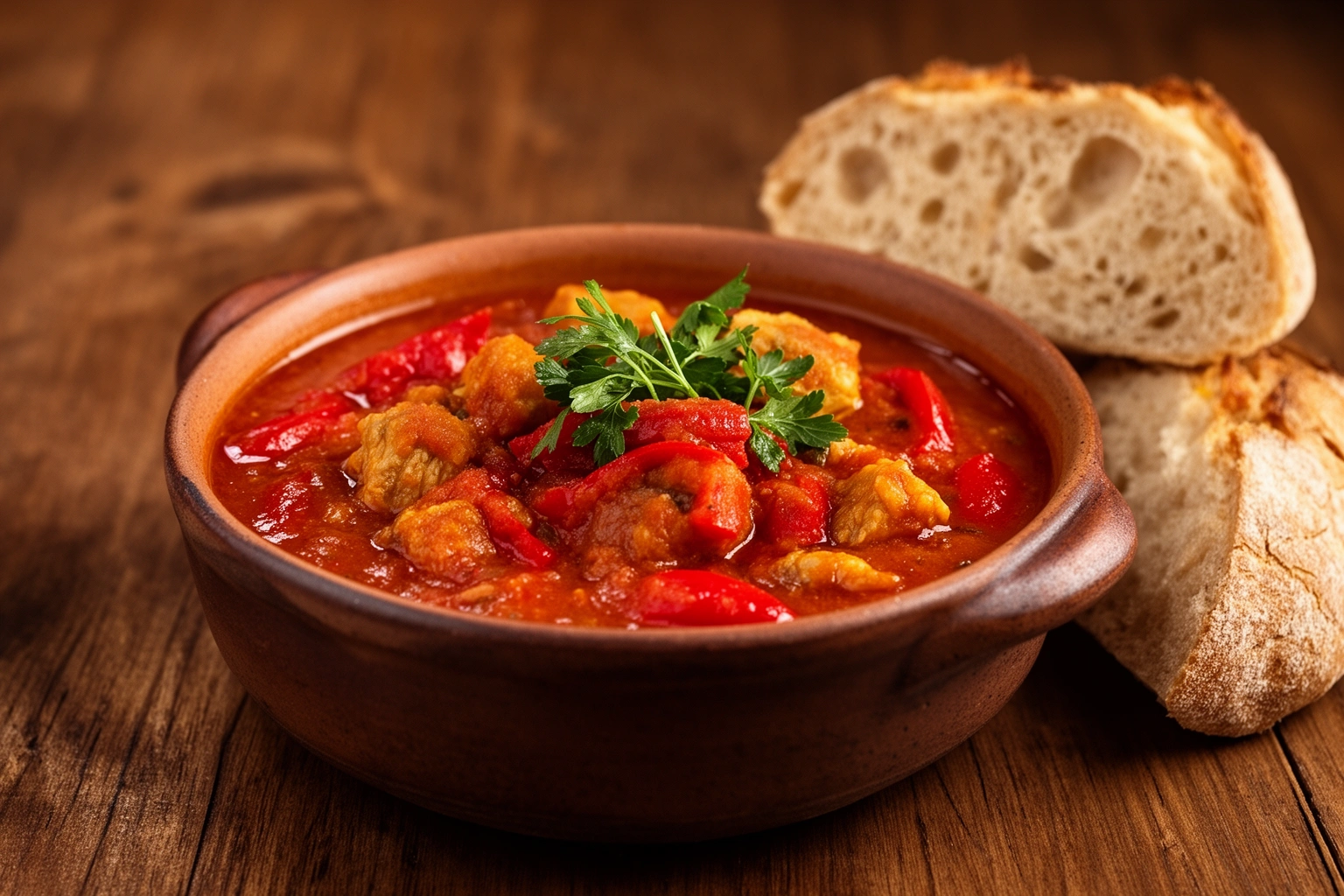
The clearest signs of an authentic pollo al chilindrón are a thick, deep red-orange sauce, bone-in chicken that’s tender but still holds its shape, and peppers that retain some texture rather than dissolving into mush. A properly made version should smell like roasted peppers and garlic before it even reaches the table.
Red Flags on the Plate
A thin or watery sauce almost always means the dish was cooked quickly rather than simmered long enough for the peppers and tomatoes to break down naturally. Boneless chicken breast, while convenient for a kitchen, strips away the flavor that bone-in thighs or drumsticks contribute during a long simmer. An overly sweet or overly acidic sauce, with no savory depth from ham or paprika, usually signals a shortcut version built from jarred sauce rather than fresh ingredients.
Menu Signals Worth Checking Before You Even Sit Down
A restaurant menu that also lists tortilla española, croquetas, patatas bravas, gazpacho, or jamón ibérico is a strong signal the kitchen understands regional Spanish cooking rather than treating chilindrón as a novelty item. If the dish is described only as “chicken in sauce” with no reference to peppers, ham, or Spanish preparation, that vagueness is itself a warning sign.
Where to Actually Look, City by City
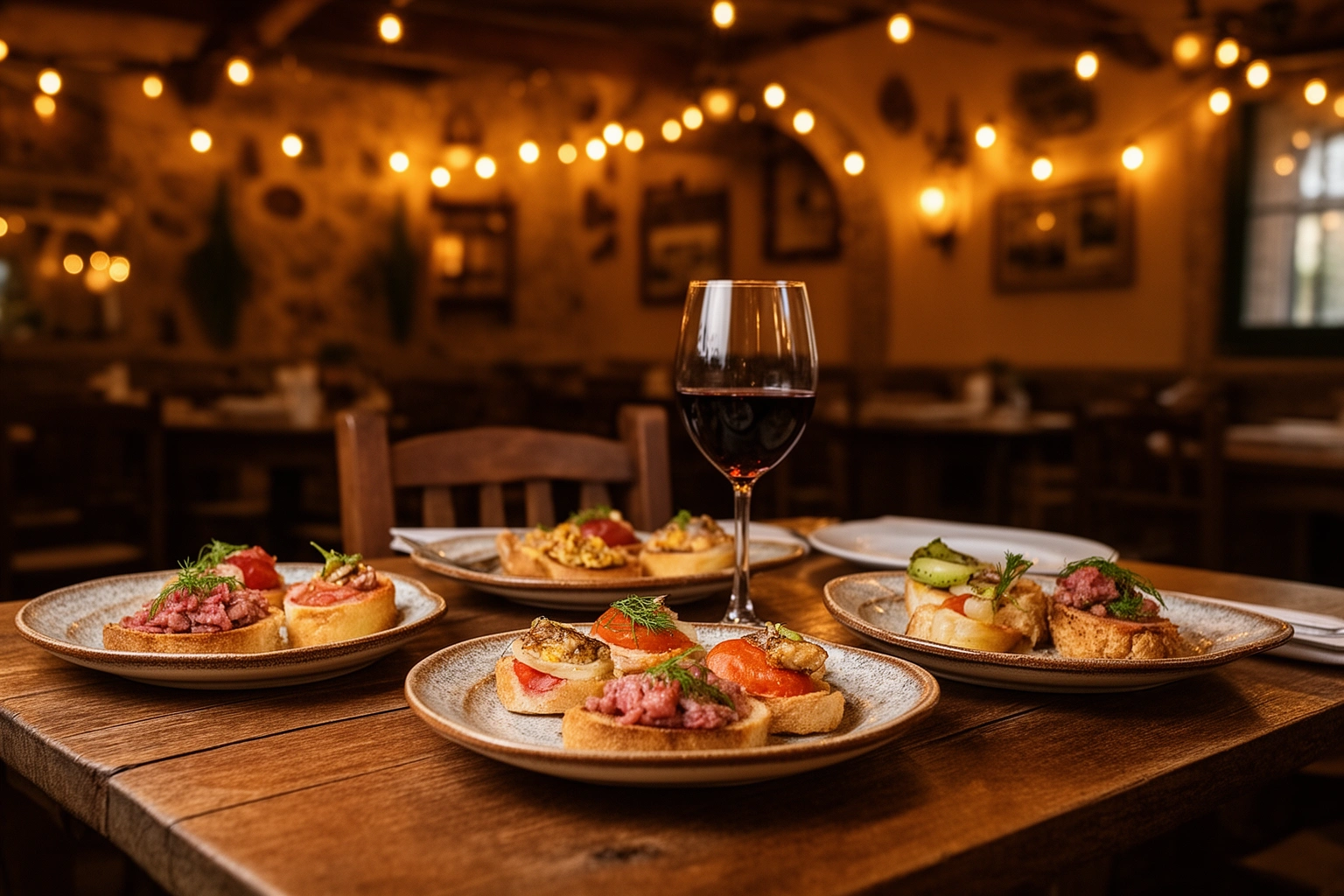
Cities with established Spanish, Basque, or broader Mediterranean dining scenes consistently offer the best odds of finding a properly made pollo al chilindrón. Below is a breakdown of what to look for in each major market, explained individually rather than as a flat list of names, since restaurant menus rotate and the smartest approach is knowing which type of establishment to target in each city.
1. New York City
New York’s Spanish dining scene concentrates around neighborhoods with strong European culinary influence, and its density of long-established tapas restaurants means chilindrón shows up more often as a rotating special than a permanent fixture. The best approach here is targeting restaurants that emphasize regional Spanish cooking specifically, rather than pan-Mediterranean or generic tapas concepts, since Aragonese and Basque-focused kitchens are the ones most likely to treat the dish with real technique. Reservation apps and recent review filters are especially useful in New York because of how frequently specials rotate.
2. Chicago
Chicago has a long-standing, well-regarded Spanish restaurant tradition, particularly in neighborhoods known for concentrated tapas and wine bar culture. Talented chefs here often honor traditional regional recipes while adapting presentation for local tastes, which makes Chicago one of the more reliable cities for finding a chilindrón that respects the source material without being a museum-piece recreation. Look specifically for restaurants that have been open for a decade or more, since chilindrón is the kind of dish that survives on a menu only when a kitchen has built a genuine following for regional Spanish cooking.
3. Miami
Miami’s food scene brings a distinct Latin-Spanish crossover to the dish, sometimes incorporating slightly brighter, more tropical notes into the sauce while keeping the core technique intact. This is one of the more interesting cities for chilindrón precisely because the Spanish immigrant community here overlaps so heavily with broader Latin American culinary influence, producing versions that stay technically faithful while picking up local character. Restaurants in neighborhoods with concentrated Spanish and Latin American dining options are the best starting point.
4. Los Angeles
Los Angeles offers considerable range, from upscale Spanish-focused restaurants doing careful, traditional preparations to more casual tapas bars offering it as a comfort-food special. Because the city’s dining scene is so spread out, targeting specific neighborhoods known for concentrated Spanish or broader Mediterranean dining is more productive than searching citywide. As with New York, checking recent reviews for specific mentions of the dish matters more here than relying on a restaurant’s general star rating.
5. San Francisco
San Francisco’s strong international dining scene, combined with a long history of Spanish and Basque immigration to Northern California, makes it a genuinely strong market for this dish. Restaurants here often lean into slow-food and farm-to-table values that align naturally with chilindrón’s emphasis on proper technique over speed, which raises the odds of finding a version cooked the traditional way. Wine bars attached to Spanish restaurants are also worth checking, since a strong Spanish wine list is often a signal of a kitchen that takes the broader cuisine seriously.
6. Houston
Houston’s large and diverse international dining scene has increasingly embraced regional Spanish cooking alongside its well-established Latin American and Tex-Mex traditions. Restaurants that specifically brand themselves around Spanish or Basque cuisine, rather than general “Mediterranean” concepts, are the better bet here, since the broader Mediterranean label often means the kitchen’s real strength lies elsewhere, in Greek or Lebanese dishes rather than Spanish regional stews.
7. Washington, D.C.
Washington, D.C. has a notably strong and well-reviewed Spanish restaurant scene, partly driven by the city’s international diplomatic community and its appetite for authentic regional cuisine. This is one of the more reliable cities for finding chilindrón prepared with real attention to technique, since D.C.’s Spanish restaurants tend to compete on authenticity rather than novelty. Look for restaurants with tasting menus or a dedicated regional Spanish section rather than a single-page tapas list.
8. Boise, Idaho
Boise is a genuine surprise on this list, but it has one of the strongest Basque cultural communities in the country, concentrated in its historic Basque Block. While chilindrón itself is more specifically Aragonese than Basque, the two regions share culinary DNA, and restaurants in Boise’s Basque district are far more likely to serve an honestly prepared version of pepper-and-tomato braised chicken than a random Spanish-labeled restaurant in a city without that cultural depth. This is a strong example of why population size alone doesn’t predict where to find the best version of a regional dish.
9. Smaller Cities and Hidden Gems
Family-owned Spanish or Mediterranean restaurants in smaller cities sometimes prepare chilindrón as an unadvertised daily special, precisely because they’re cooking from genuine family recipes rather than a marketing-driven menu. These restaurants often have minimal online marketing, so word-of-mouth, local food Facebook groups, and direct phone calls asking whether the kitchen prepares regional Aragonese or Basque dishes tend to work better than search engines alone.
How to Search More Effectively Than Just Typing the Dish Name
Combining the dish name with qualifiers like “authentic,” “traditional,” or “Aragonese” in your search consistently surfaces better results than searching the dish name alone. Search engines and map apps tend to weight these qualifier terms toward restaurants that have specifically been reviewed for regional authenticity, rather than generic tapas spots that happen to list the dish once.
Reading Reviews the Right Way
Look specifically for reviews mentioning tenderness of the chicken, richness of the sauce, and direct comparisons to homemade or “like my grandmother made” language, since these are the phrases genuine fans of the dish tend to use. Reviews focused only on service speed or ambiance, without mentioning the dish’s specific qualities, tell you little about whether the kitchen actually nailed the recipe.
Using Photos to Pre-Screen a Restaurant
A properly made pollo al chilindrón photographs with a deep red-orange, glossy sauce clinging to visible bone-in chicken pieces, with peppers that still hold some shape rather than dissolving completely. If every photo shows a thin, pale, or orange-tinted-but-watery sauce, that’s a legitimate reason to look elsewhere before booking a table.
What to Order Alongside It
Rice, crusty bread, and roasted potatoes are the traditional companions, each suited to soaking up the rich pepper-and-tomato sauce. Simple white rice absorbs the sauce without competing with its flavor, crusty Spanish-style bread is the classic choice for wiping the plate clean, and roasted or boiled potatoes add a heartier, more filling option for a full dinner.
Wine and Drink Pairings
A crisp Spanish white like Albariño cuts nicely through the richness of the sauce, while a lighter-bodied red such as Tempranillo complements the sweetness of the roasted peppers without overwhelming the dish. Diners who prefer non-alcoholic pairings often do well with sparkling water and a slice of citrus, since the acidity plays a similar role to what wine contributes.
Homemade Versus Restaurant: When Each Makes Sense
Restaurant versions typically benefit from professional technique and properly sourced ingredients like Spanish paprika and imported jamón, while homemade versions offer more control over spice level and ingredient substitutions. If a specific restaurant in your area has built a genuine reputation for the dish, that professional experience, developed over dozens or hundreds of repetitions, is difficult to replicate on a first home attempt. On the other hand, if no reliable local option exists, a homemade version using bone-in chicken thighs, roasted red peppers, and a slow two-hour simmer can come impressively close.
Is Pollo al Chilindrón a Healthy Choice?
The dish is generally a reasonably balanced choice, built on lean protein, vegetables, and olive oil rather than cream, cheese, or deep frying. Chicken thighs do carry more fat than breast meat, but the dish’s overall nutritional profile benefits from being naturally gluten-free and vegetable-forward compared to heavier, cream-based European chicken preparations. Portion size and the amount of bread or rice served alongside it will affect the overall meal’s calorie count more than the chilindrón itself.
Common Mistakes Restaurants Make With This Dish
The most frequent mistakes are rushing the simmer time, substituting boneless chicken for convenience, and relying on jarred sauce instead of fresh peppers and tomatoes. A kitchen under time pressure during a dinner rush is the most common reason chilindrón turns out thin or flavorless, since the dish fundamentally depends on time rather than technique complexity. Restaurants that batch-cook the sauce in advance and finish the chicken to order tend to produce far more consistent results than those attempting the entire dish from scratch during service.
Check These Related Articles
- Ftasiatrading Technology News By Fintechasia: Fact Check
- Techinsiderz Com Gadgets: What Each Domain Reviews
- Emergingtechs Net Stay Updated Always: What It Covers
- Insights LogicalShout: The Platform That Isn’t Real
- Newsflashburst Com: What It Is, Is It Legit
Tracking down a specific regional dish takes the same instincts as verifying any niche recommendation online: check specifics over generic praise, and trust detailed evidence over vague marketing language. Readers who found success separating real fintech trends from fabricated platform claims were using the same underlying skill, looking past the surface description to the actual, checkable details underneath.
Frequently Asked Questions
What is pollo al chilindrón exactly?
Pollo al chilindrón is a traditional Aragonese Spanish dish of chicken slow-simmered in a sauce of roasted red peppers, tomatoes, garlic, onion, and olive oil, sometimes finished with cured Spanish ham.
Which cities are best for finding authentic pollo al chilindrón?
New York, Chicago, Miami, Los Angeles, San Francisco, Houston, Washington D.C., and surprisingly Boise, Idaho, thanks to its strong Basque cultural community, all offer good odds.
How can you tell if a restaurant’s version is authentic?
A thick, deep red-orange sauce, bone-in chicken that’s tender but holds its shape, and peppers that retain some texture rather than dissolving completely.
What are the most common mistakes restaurants make with this dish?
A watery or thin sauce, boneless chicken breast instead of bone-in pieces, and an overly sweet or acidic flavor with no savory depth are the clearest warning signs.
What sides pair best with pollo al chilindrón?
Simple white rice, crusty Spanish-style bread, and roasted or boiled potatoes are the traditional accompaniments.
What wine pairs well with pollo al chilindrón?
A crisp Spanish white like Albariño or a lighter-bodied red such as Tempranillo both complement the dish well.
Is pollo al chilindrón a healthy dish?
Yes, generally. It’s built on lean protein, vegetables, and olive oil rather than cream or deep frying, and it’s naturally gluten-free.
How can you search more effectively for this dish nearby?
Search using qualifiers like authentic, traditional, or Aragonese alongside the dish name, and read reviews specifically mentioning tenderness and homemade flavor rather than relying on star ratings alone.