Guiso de lentejas gets dismissed as “just lentil soup” more often than almost any other dish on this list, and that’s the biggest reason people end up disappointed. A properly made version isn’t a thin, watery soup at all, it’s a thick, slow-simmered stew where lentils absorb hours of smoky paprika, cumin, and rendered fat from chorizo or ham hock until the broth itself carries real body. Searching “best guiso de lentejas near me” usually means you’ve had a version that actually earned that description, and you’re trying to find it again.
This guide breaks down what defines a properly made guiso de lentejas, the meaningful regional differences worth knowing, and exactly where to look depending on which country’s version you’re after.
- Guiso de lentejas spans Spain, Argentina, Colombia, Venezuela, Ecuador, and beyond, each with distinct regional ingredients worth knowing before you order.
- A properly made version has a rich, creamy-bodied broth from released lentil starch, never a thin, watery liquid, with lentils tender but never mushy.
- Spanish versions lean on chorizo, smoked paprika, and olive oil; Colombian versions add hogao; Venezuelan versions bring in corn and squash for sweetness.
- Restaurants that let the stew rest for hours after cooking, sometimes up to six, before service often develop noticeably deeper, more integrated flavor.
- Colombian, Venezuelan, Ecuadorian, Argentine, and Spanish restaurants are your most reliable starting points, and daily specials boards are worth checking specifically.
- A high star rating alone means little if the restaurant specializes in something else entirely; look for specific mentions of the dish in recent reviews.
What Guiso de Lentejas Actually Is
Guiso de lentejas is a thick, slow-cooked lentil stew, distinctly heartier and more developed in flavor than a simple lentil soup, built on vegetables, aromatic spices, and often cured meat. The dish traces much of its heritage to Spanish colonial influence, itself shaped by centuries of Moorish culinary tradition that favored spiced, slow-cooked legume dishes. When Spanish colonizers brought these recipes to Latin America, indigenous ingredients, new peppers, herbs, and root vegetables, merged into the pot, producing the wide range of regional variations found today.
What Separates It From Ordinary Lentil Soup
The broth should develop real body from starch naturally released during a long simmer, never from artificial thickeners, and the lentils should remain tender while still holding their shape rather than dissolving into mush. Properly made versions in Spain specifically can take 1.5 to 2 hours of cooking at minimum, and some kitchens let the finished stew rest for two to four hours, occasionally as long as six, before serving, since that resting period allows the flavors to integrate far more completely than serving it immediately off the stove.
How the Dish Changes by Country
Spain, Argentina, Colombia, Venezuela, and Ecuador each bring distinct regional character to guiso de lentejas, and knowing the difference helps you order the version that actually matches what you’re craving.
Spain
Classic Spanish lentejas estofadas or lentejas con chorizo leans heavily into smoked paprika and olive oil, producing an earthier, smokier profile with noticeably less heat than its Latin American cousins. Regional variations exist even within Spain itself, Castilian, Asturian, and Extremaduran versions each carry their own subtle differences in technique and ingredient emphasis, while all preserving the same slow-cooked, patient foundation.
Argentina and Uruguay
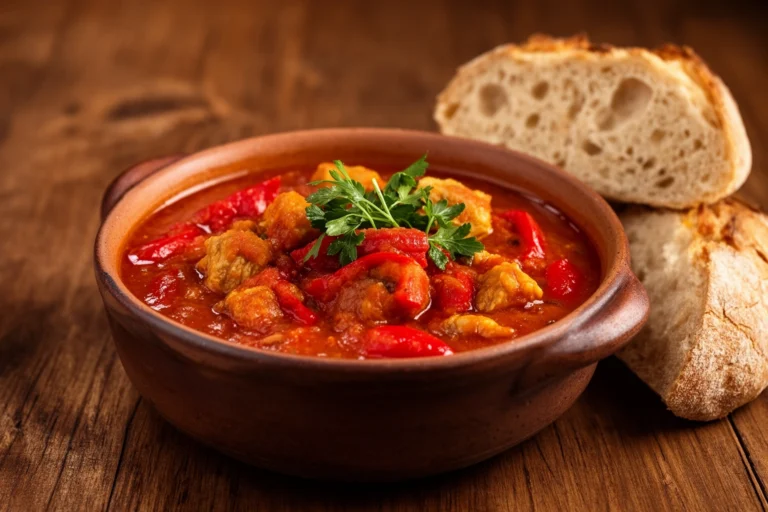
Argentine recipes are famous for being especially hearty, commonly incorporating beef, sausage, pumpkin, potatoes, and carrots in a rich tomato broth, making it an especially popular cold-weather dish. Uruguayan preparations closely resemble the Argentine style, emphasizing slow cooking and generous portions over any major recipe divergence.
Colombia
Colombian guiso de lentejas often features hogao, a deeply caramelized sauce of tomatoes and green onions, stirred into the stew near the end of cooking for extra richness. It’s typically served alongside white rice, sweet plantains, and arepas, rounding out the meal with the starches and sweetness Colombian cuisine builds around so often.
Venezuela
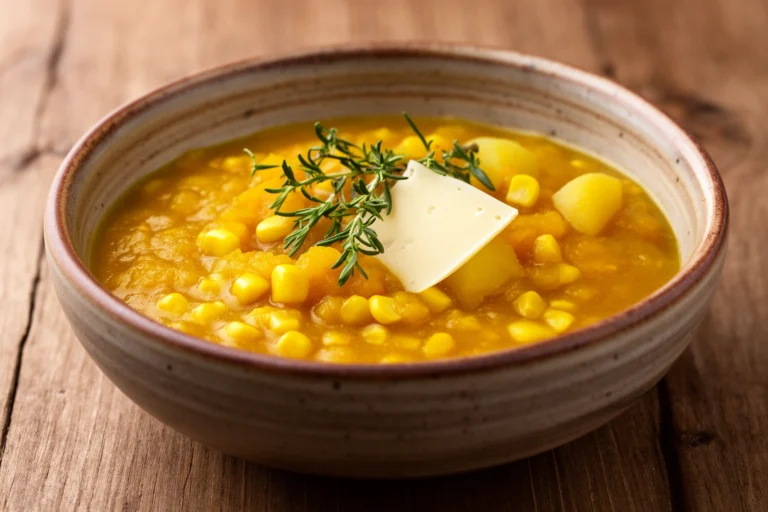
Venezuelan versions frequently include corn kernels and squash, producing a noticeably sweeter, more complex flavor profile than the Spanish or Argentine styles. A side of shredded beef, carne mechada, commonly accompanies the stew, adding a distinct protein element beyond what’s already simmered into the pot.
Ecuador and Peru
Ecuadorian and Peruvian kitchens often weave ají amarillo or other local Andean chiles into the sofrito base, bringing a fruity, floral heat that’s genuinely unique to this region and distinct from anything found in the Spanish or Argentine versions.
How to Judge Quality Before You Order
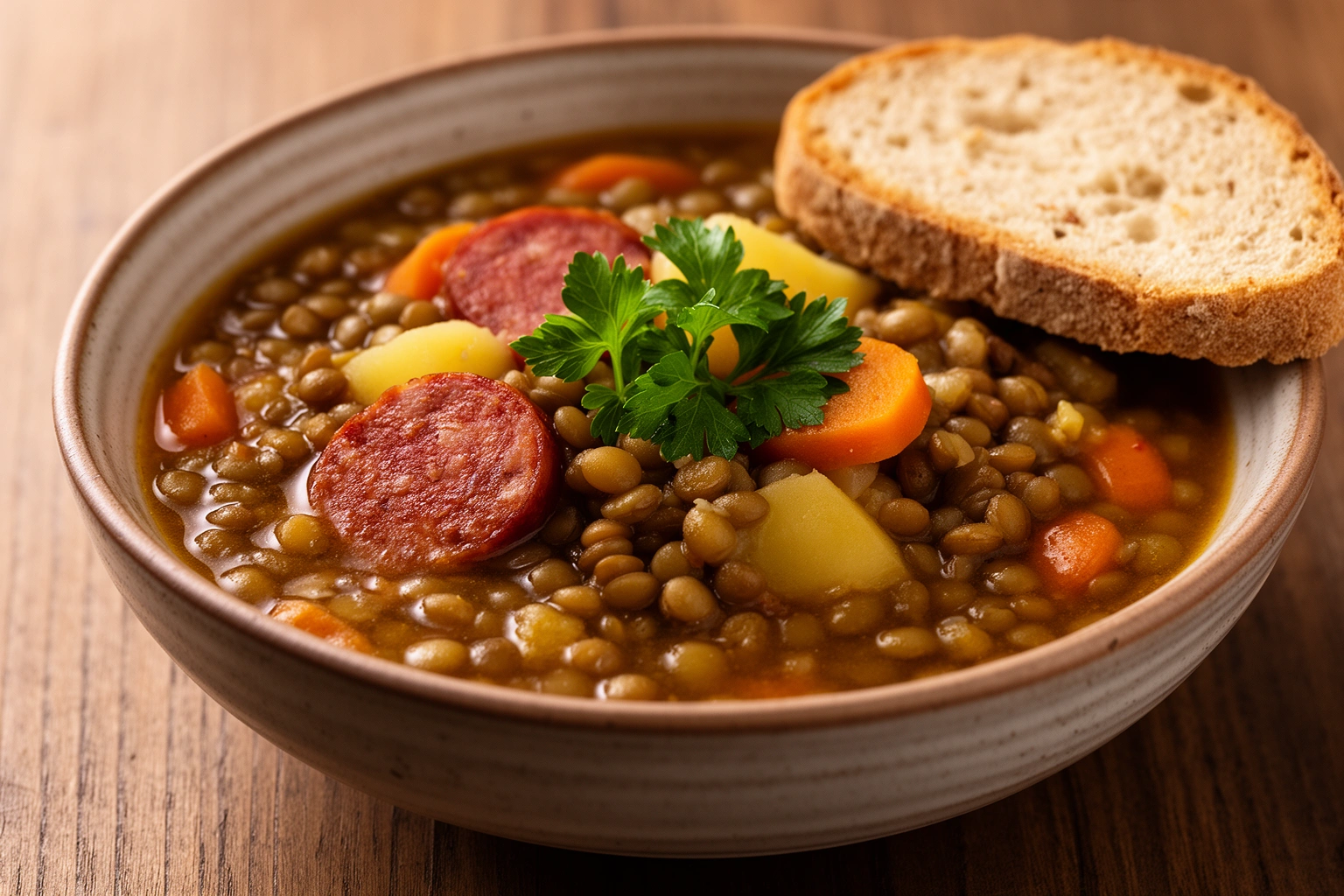
A properly made guiso de lentejas should display a rich, creamy broth rather than a watery liquid, with tender but distinct lentils and an aroma revealing layers from olive oil, sofrito, bay leaves, and cured meats. Taste should unfold gradually across a spoonful, revealing notes from chorizo, jamón, pancetta, or morcilla without any single ingredient dominating the whole dish.
Warning Signs Worth Watching For
A restaurant claiming authenticity while serving a stew that was clearly prepared in under an hour is a legitimate red flag, since the dish fundamentally depends on time for its lentils and vegetables to properly meld. A watery, thin broth, or one that tastes overly salty or artificial rather than genuinely savory, both signal a rushed or lower-quality preparation. A high star rating alone tells you little if the restaurant primarily specializes in something else entirely; specific, recent reviews mentioning the stew by name and describing its texture matter far more.
Reading Reviews the Right Way
Prioritize reviews mentioning specific texture and flavor details, a rich broth, tender lentils, noticeable smokiness from chorizo or paprika, over a general star rating without detail. Reviews describing the dish as tasting “homemade” or comparing it favorably to a family recipe are a particularly strong positive signal.
Where to Look, By Cuisine Type
Colombian, Venezuelan, Ecuadorian, Argentine, and Spanish restaurants are your most reliable starting points, and checking daily specials boards specifically is often more productive than scanning a printed menu alone.
Colombian, Venezuelan, and Ecuadorian Restaurants
These establishments frequently rotate guiso de lentejas into their daily specials, or “plato del día,” particularly on colder days or weekends, so calling ahead to ask whether it’s on the menu that specific day is a genuinely useful step, and one that signals a kitchen taking the dish seriously rather than serving it as an afterthought.
Argentine Restaurants
Argentine-focused restaurants tend to serve a heartier, meat-forward version, often featuring beef and sausage alongside the lentils, and are particularly worth checking during colder months when the dish sees its heaviest rotation onto seasonal menus.
Spanish Tapas Bars and Restaurants
Restaurants emphasizing Spanish heritage, regional cooking, or family ownership are the most reliable source for the smokier, paprika-forward Spanish style. Spanish-style dining establishments known for authentic tapas and Northern Spanish flavors frequently include slow-cooked stews similar in style to guiso de lentejas, even if the exact dish name varies slightly on the menu.
Latin Grocery Stores With Prepared Food Counters
This is a genuinely underrated source: many Latin grocery stores, especially those with a deli or hot food counter, serve guiso de lentejas as part of a daily rotation of prepared dishes, often at a lower price point and with more consistent, home-style preparation than a full-service restaurant.
Questions Worth Asking Before You Order
Asking whether the stew is prepared fresh daily, what protein it includes, and whether traditional accompaniments like rice, plantains, or bread are available all help set the right expectations before your food arrives. A good restaurant will confidently and specifically answer these questions rather than giving a vague response, and that confidence itself is a meaningful signal about how seriously the kitchen treats the dish.
Dietary Considerations
In most traditional recipes, guiso de lentejas is naturally gluten-free, since lentils, vegetables, and spices form the core of the dish, though some restaurants may add thickeners or automatically serve it alongside bread, so it’s worth confirming directly if that matters for your diet. Many modern restaurants now offer vegetarian or vegan versions built on vegetable stock, emphasizing natural sweetness and herbs in place of meat, while preserving the same comforting character as the traditional preparation.
Making It at Home
A solid homemade version depends far more on cooking time than on ingredient complexity: budget at least 1.5 to 2 hours of genuine simmering, and consider letting the finished stew rest for a few hours before serving if time allows. Start with a proper sofrito, sautéed onions, garlic, and tomatoes, as your flavor base, then build in smoked paprika, cumin, and bay leaves alongside your choice of chorizo, ham hock, or bacon for depth. Resist the urge to rush the simmer; the broth’s characteristic body comes specifically from starch released slowly over time, not from any shortcut or thickening agent.
Check These Related Articles
- Best Chuflay Cocktail Near Me: Complete Guide
- Best Pasticho Venezuelan Lasagna Near Me: City Guide
- Best Ensalada De Garbanzos Near Me: Complete Guide
- Best Locro De Zapallo Near Me: Complete City Guide
- Best Cocido Gallego Near Me: Complete City Guide
Tracking down a properly made guiso de lentejas uses the same approach that worked for finding an authentic Chuflay: know the specific regional variation you’re after before you search, prioritize restaurants that specialize in that cuisine specifically rather than a broad label, and trust detailed reviews describing texture and flavor over a star rating alone.
Frequently Asked Questions
What exactly is guiso de lentejas?
It’s a thick, slow-cooked lentil stew built on vegetables, aromatic spices, and often cured meat like chorizo or ham hock, distinctly heartier than a simple lentil soup.
How does guiso de lentejas differ by country?
Spanish versions lean on smoked paprika and olive oil, Argentine versions add beef and pumpkin, Colombian versions include hogao, Venezuelan versions add corn and squash, and Ecuadorian versions use ají amarillo.
How can you tell if a restaurant’s version is authentic?
A rich, creamy broth from naturally released starch, tender but distinct lentils, and layered aromas from olive oil, sofrito, bay leaves, and cured meats.
Where is the best place to find authentic guiso de lentejas?
Colombian, Venezuelan, Ecuadorian, Argentine, and Spanish restaurants are the most reliable starting points, along with Latin grocery stores with prepared food counters.
What are the warning signs of a poorly made version?
A watery or thin broth, an overly salty or artificial taste, and a stew that was clearly prepared in under an hour despite claims of authenticity.
Is guiso de lentejas gluten-free?
Yes, most traditional recipes are naturally gluten-free since lentils, vegetables, and spices form the core, though some restaurants may add thickeners or automatically serve bread alongside it.
How long does a properly made guiso de lentejas take to cook?
Budget at least 1.5 to 2 hours of genuine simmering, and let the finished stew rest for a few hours if possible, since the flavor develops more fully with time.
Are there vegetarian or vegan versions of this dish?
Yes, many modern restaurants offer versions built on vegetable stock, emphasizing herbs and natural sweetness in place of meat while keeping the same comforting character.