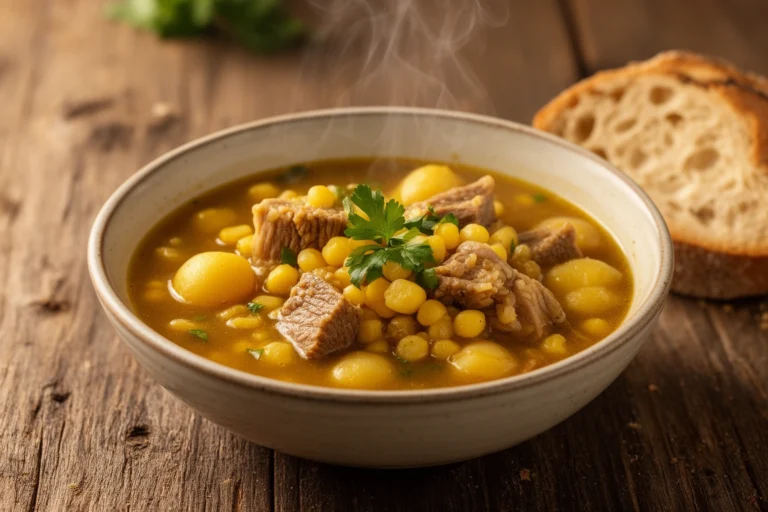
Cocido gallego is not the kind of dish you order on a whim between meetings. It’s a slow-cooked, three-course feast from Galicia in northwestern Spain, built on chickpeas, multiple cuts of pork, chorizo, and turnip greens, meant to be eaten over an hour or more, not rushed through a lunch break. Searching “best cocido gallego near me” usually means you already know the difference between this and a quick bowl of soup, and you’re looking for a kitchen that respects that difference.
This guide breaks down exactly what separates a properly made cocido gallego from a shortcut version, and walks through where to actually find it, region by region and city by city.
- Cocido gallego is served in three separate courses, broth first, then vegetables, then meats, and skipping this presentation is a sign of a shortcut version.
- Authentic versions require chickpeas, multiple pork cuts (often including lacón), chorizo, potatoes, and grelos or turnip greens, not a single generic protein.
- It’s meaningfully different from cocido madrileño and from the lighter soup caldo gallego, confusing the three leads to ordering the wrong dish entirely.
- New York City, Miami, Chicago, and Los Angeles have the strongest concentrations of restaurants serving it, but availability is often seasonal and limited to specific days.
- Calling ahead matters more for this dish than almost any other, since it’s rarely made to order and kitchens frequently sell out.
- Wine pairing matters: high-acid reds like Caíño Tinto or Goliardo Tinto from Ribeiro cut through the fat far better than heavy tannic reds.
What Cocido Gallego Actually Is
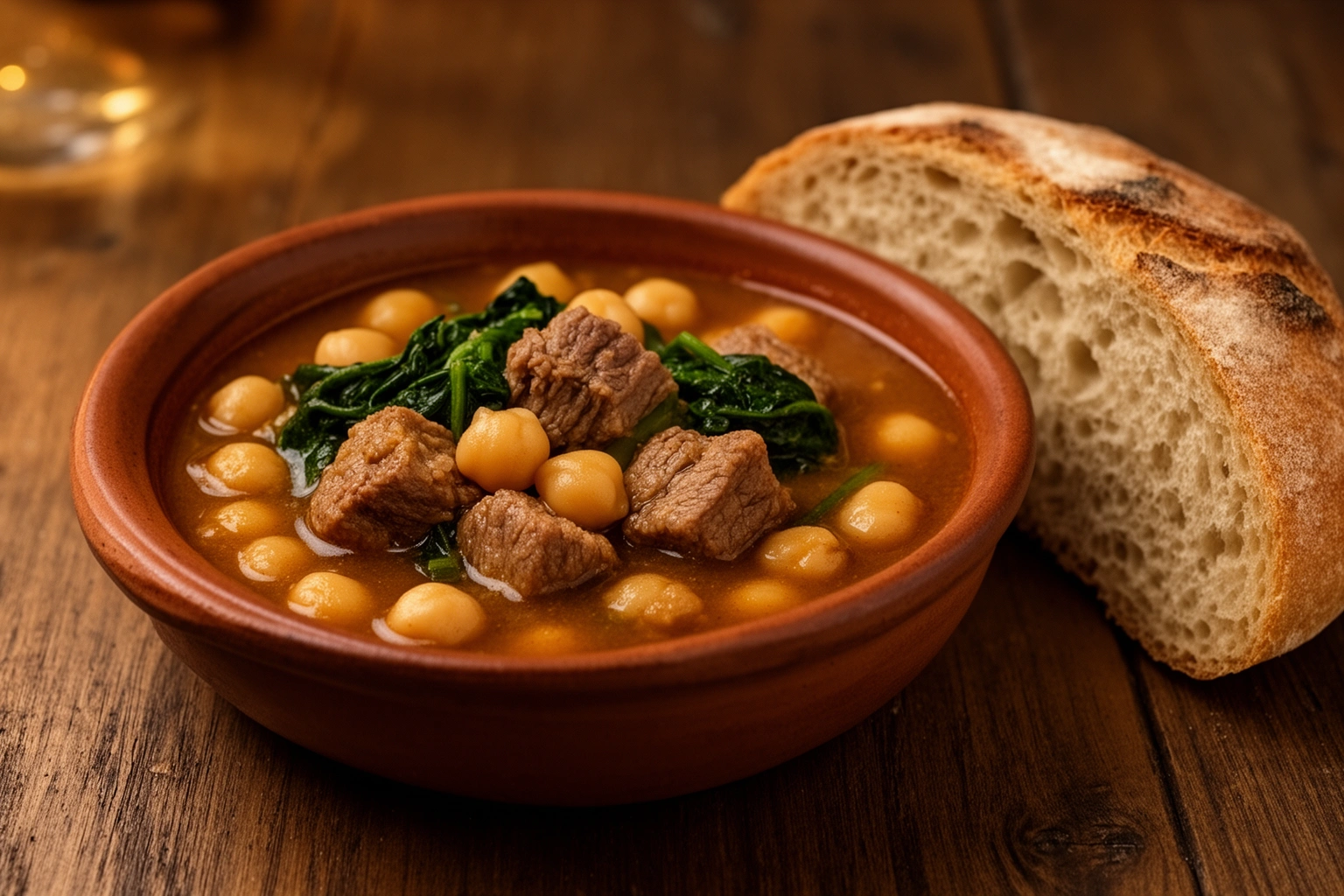
Cocido gallego is a slow-cooked, one-pot Galician feast built around chickpeas, multiple cuts of pork, chorizo, potatoes, and turnip greens, traditionally served in three separate courses. The broth arrives first as a starter, followed by the vegetables, and finally the assembled meats as the main event. This staged presentation is not a stylistic flourish, it’s how the dish has always been served in Galicia, and skipping it in favor of one mixed bowl is one of the clearest signs a restaurant is taking a shortcut.
The Ingredients That Actually Define It
A proper version includes lacón, a cured and often smoked pork shoulder or foreleg, alongside chorizo, pork ribs or belly, chickpeas, potatoes, cabbage, and grelos, the slightly bitter turnip greens that give the dish its distinctive Galician character. Lacón is genuinely difficult to source outside of Spain; restaurants and home cooks in the United States frequently substitute smoked pork neck or smoked ham hock, which provides similar smoky depth without the exact cured-foreleg texture.
Why It’s Easy to Order the Wrong Dish
Three related but distinct dishes create confusion in search results and on menus: cocido gallego, the full multi-course feast covered here; caldo gallego, a much lighter soup version without the same meat-heavy, multi-course presentation; and cocido madrileño, a different regional stew from Madrid with its own distinct ingredients and character rooted in Castilian rather than Galician cooking. Searching “best cocido gallego near me” and “best caldo gallego near me” will often surface overlapping results, so checking a menu’s actual description before ordering matters more than the restaurant’s general reputation for Spanish food.
How to Judge Authenticity Before You Sit Down
The clearest signs of an authentic cocido gallego are staged, three-course serving, a genuinely rich broth, and meats that fall off the bone rather than arriving dry or underseasoned. A kitchen that respects the dish will typically only offer it on specific days of the week, since batch-cooking cocido properly takes hours and isn’t practical as a daily, made-to-order item.
Warning Signs Worth Watching For
A menu offering cocido gallego as a quick daily lunch special, with minimal description and no mention of specific cuts or grelos, is a meaningful red flag. A watery or overly salty broth typically signals the dish was rushed or built from shortcuts rather than simmered properly for hours. Everything arriving mixed together in a single bowl, rather than staged in courses, strips away one of the dish’s defining traditions, even if the flavor itself is still decent.
What Genuine Reviews Actually Sound Like
Look specifically for reviews mentioning “rich broth,” “tender meat,” “fell off the bone,” or direct comparisons to a grandmother’s cooking or meals eaten in Galicia itself. Reviews that only discuss service speed or ambiance, without describing the broth’s depth or the meat’s texture, tell you very little about whether the kitchen actually executed the dish correctly.
Where to Find It: Spain First, Then the US
In Spain, the three strongest regions for cocido gallego are the town of Lalín, Santiago de Compostela, and Madrid, each offering a genuinely different experience of the dish. Lalín is considered the spiritual home of cocido gallego and hosts an annual multi-day Cocido Festival featuring a parade, a meat auction, and even a mascot pig wearing a sign reading “I’m From Lalín,” a genuine testament to how seriously the region takes this dish. Santiago de Compostela, the Galician capital, offers numerous traditional taverns serving it as a defining regional specialty rather than a novelty. Madrid, despite being outside Galicia, has multiple traditional taverns serving cocido gallego year-round, a reflection of internal Spanish migration bringing regional specialties to the capital.
Where to Look in the United States, City by City
New York City, Miami, Chicago, and Los Angeles offer the strongest concentrations of restaurants serving genuine cocido gallego, though availability tends to be seasonal and limited to specific days. Each city requires a slightly different search strategy based on its particular Spanish and Galician community history.
1. New York City
New York’s long history of Spanish immigration supports several restaurants specifically known for cocido gallego rather than treating it as an occasional special. Casa Galicia has built a reputation specifically around this dish, with a warm, Northern Spain-style atmosphere and a signature stew that honors traditional ingredients. La Nacional, a restaurant with decades of history in the city, is known for serving the community consistently, with a rustic, no-shortcuts approach that regulars specifically return for. Both are worth calling ahead to confirm the dish is being served that day, since it’s rarely made to order.
2. Miami
Miami’s large Spanish-speaking population supports multiple restaurants and Spanish social clubs serving Galician and broader Spanish cuisine, with cocido gallego appearing more consistently here than in many other US cities. Local Spanish clubs and community taverns are worth checking specifically, since these often serve the dish more reliably and with more traditional preparation than mainstream restaurants targeting tourists. Searching specifically for “Galician” or “northern Spanish” rather than just “Spanish” restaurants tends to filter toward kitchens more likely to take the dish seriously.
3. Chicago
Chicago’s established Spanish dining scene includes several restaurants with the experience and reputation to prepare cocido gallego properly, particularly around neighborhoods known for concentrated Spanish and tapas culture. As with most cities on this list, targeting restaurants that specifically identify as Galician or northern Spanish, rather than general Spanish or Mediterranean, is the more reliable filter.
4. Los Angeles
Los Angeles offers a wide range of Spanish dining options, and while cocido gallego is less commonly a signature dish here compared to New York or Miami, dedicated Spanish and Galician-focused restaurants do serve it, particularly during colder months. Because the city is so spread out, checking specific neighborhoods known for Spanish dining, rather than searching citywide, tends to produce better results.
5. Smaller Cities and Family-Run Spots
Some of the best versions of this dish come from small, family-run restaurants with minimal online marketing, since these kitchens are often cooking from genuine multi-generational family recipes rather than a marketing-driven menu. Local Spanish cultural organizations, community groups, and word-of-mouth recommendations from people who grew up eating the dish tend to surface these hidden spots far more effectively than a general search engine query.
Timing Your Visit Correctly
Cocido gallego is predominantly a cold-weather dish, most commonly available from autumn through early spring, and is often served only on specific days of the week rather than daily. Because the dish takes hours to prepare properly and doesn’t lend itself to quick, made-to-order service, many kitchens batch-cook it once or twice a week and sell out. Calling ahead is genuinely one of the most useful steps in this entire search process, more useful than any online review, since it directly confirms whether the kitchen is serving it that day and whether they’ve sold out.
What to Drink With It
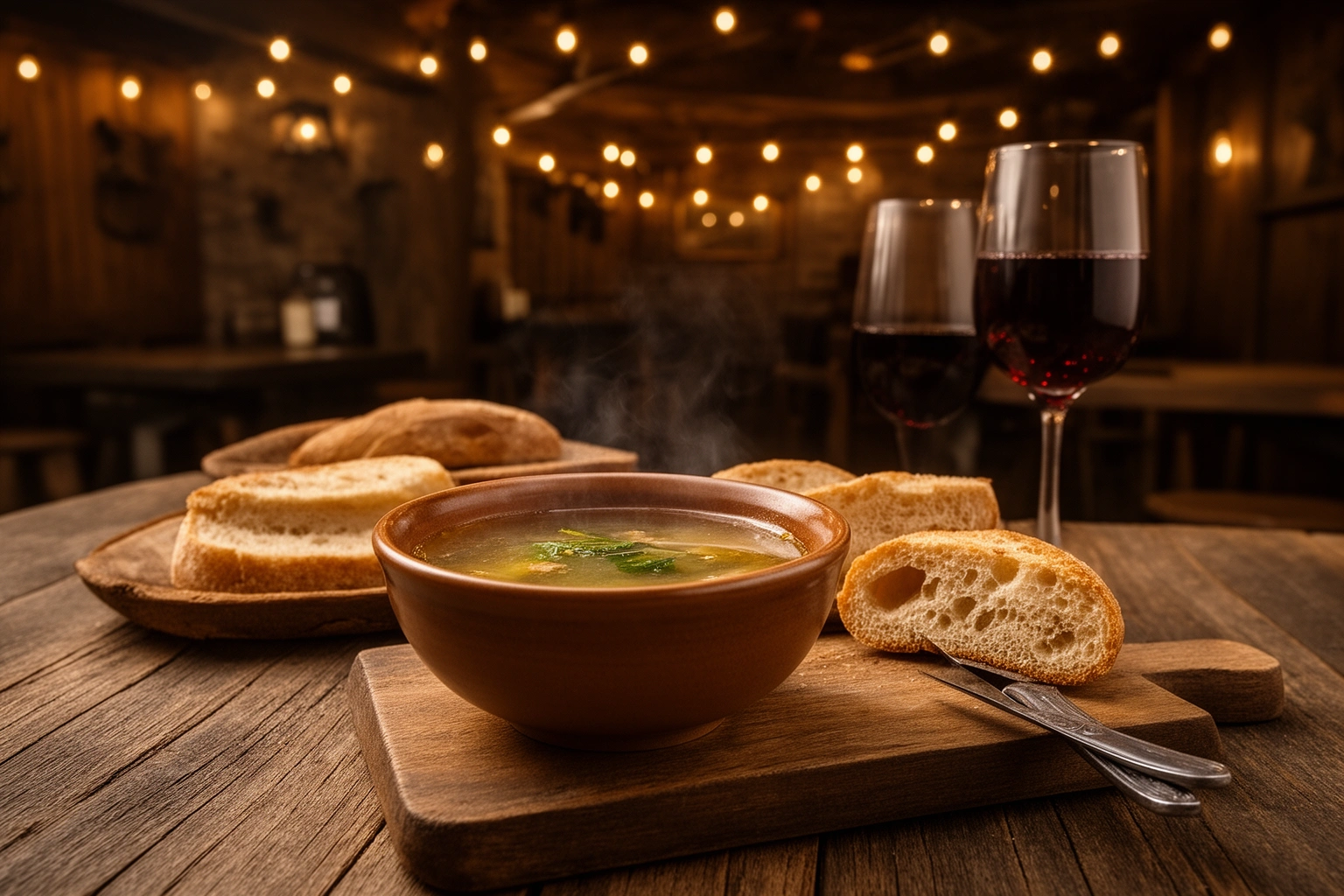
High-acid, lighter-bodied red wines cut through the richness of cocido’s fatty pork cuts far more effectively than heavy, tannic reds. Carlota Cabanas, a sommelier at Restaurante Cabanas in Lalín, specifically recommends Caíño Tinto, a wine whose acidity refreshes the palate between the dish’s richer bites. Phil Gonzalez of Tomiño Taberna Galega in New York City suggests a light-bodied, high-acid red like Goliardo Tinto, or a rounder Escolma Tinto from the Ribeiro region, both chosen specifically for their ability to cut through fat rather than compete with it. The general principle applies regardless of the specific bottle: look for acidity over tannin when pairing wine with this dish.
What to Order Alongside It
Crusty bread for soaking up the broth, and a light dessert like tarta de Santiago or natillas, are the traditional companions to a proper cocido gallego meal. Because the dish is already extremely filling on its own, built from multiple courses and rich meats, additional heavy sides are rarely necessary or traditional. A light salad or pickled vegetables on the side can help cut through the richness for diners who want a small contrast alongside the main event.
Is Cocido Gallego a Healthy Choice?
Cocido gallego offers genuine nutritional value as a protein-rich meal built on chickpeas, pork, and vegetables, though it’s calorie-dense given its multiple meat courses. The chickpeas contribute fiber and plant protein, the greens add nutrients often missing from heavier European comfort dishes, and the slow-cooking method preserves nutrients without relying on processed additives. That said, this is unambiguously a hearty, filling meal built for a long, relaxed sitting rather than a light lunch, and portion sizes reflect that.
Making It at Home When No Local Option Exists
A home version starts with soaking chickpeas overnight, slow-simmering multiple pork cuts for several hours, and adding vegetables in stages so nothing turns to mush. The most common sourcing challenge for home cooks in the United States is finding lacón; smoked pork neck or a smoked ham hock from a butcher or a well-stocked international grocery store are the most practical substitutes, providing similar smoky depth even without the exact cured-foreleg texture found in Galicia itself.
Check These Related Articles
- Best Pollo Al Chilindron Near Me: City By City Guide
- Ftasiatrading Technology News By Fintechasia: Fact Check
- Techinsiderz Com Gadgets: What Each Domain Reviews
- Emergingtechs Net Stay Updated Always: What It Covers
- Insights LogicalShout: The Platform That Isn’t Real
Finding an authentic regional dish like cocido gallego takes the same approach as tracking down the best pollo al chilindr\u00f3n nearby: know the specific markers of quality before you search, target restaurants that specialize in the region rather than generic labels, and treat calling ahead as more valuable than any star rating.
Frequently Asked Questions
What exactly is cocido gallego?
It’s a slow-cooked Galician feast built on chickpeas, multiple pork cuts (often including lacón), chorizo, potatoes, and turnip greens, traditionally served in three courses: broth, vegetables, then meats.
How is cocido gallego different from cocido madrileño?
Cocido gallego is Galician and emphasizes turnip greens, cured pork, and rustic broth. Cocido madrileño comes from Madrid with different regional meats and vegetables rooted in Castilian cooking.
Which US cities are best for finding authentic cocido gallego?
New York City, Miami, Chicago, and Los Angeles have the strongest concentrations of restaurants serving it, though availability is often seasonal and limited to specific days.
What signs indicate an authentic version?
Staged three-course serving, a genuinely rich broth, meats that fall off the bone, and reviews specifically mentioning tenderness and homemade flavor rather than generic praise.
Why is it important to call ahead before visiting a restaurant?
It’s often prepared only on specific days due to the hours-long cooking process, and kitchens frequently sell out, so calling ahead is one of the most useful steps.
What wine pairs best with cocido gallego?
High-acid, lighter-bodied reds like Caíño Tinto or Goliardo Tinto from Ribeiro cut through the dish’s fat far better than heavy, tannic reds.
What’s the best substitute for lacón when cooking at home?
Lacón, a cured pork shoulder, is hard to find in the US. Smoked pork neck or a smoked ham hock are the most practical substitutes.
Is cocido gallego a healthy meal?
Yes, generally. It’s protein-rich from chickpeas and pork, and the greens add nutrients, though it’s calorie-dense and best treated as a full, filling meal.