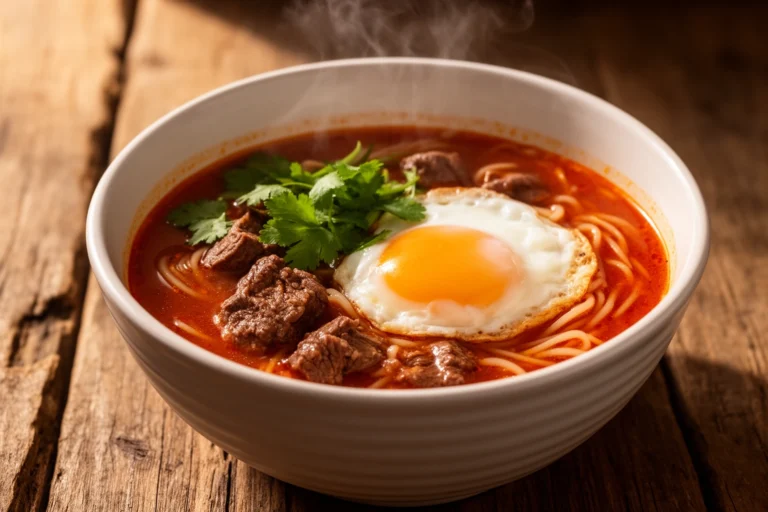
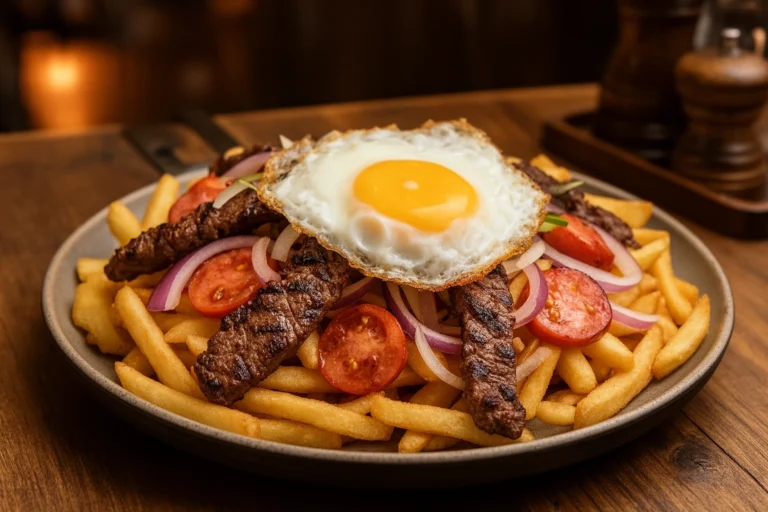
Fricase boliviano is a breakfast dish in Bolivia, which throws off a lot of first-time searchers expecting a dinner-only stew. It’s a thick, spicy pork soup built on slow-cooked pork, hominy corn or chuño, potatoes, and an ají amarillo broth, traditionally eaten hot in the morning, especially on cold days and weekends. Searching “best fricase boliviano near me” usually means you’ve had a version with real depth, a thick broth that coats a spoon, pork that’s tender rather than dry, and you’re not willing to settle for something thin and generic wearing the name.
This guide breaks down what actually separates an authentic fricase from a disappointing one, and exactly what signals to look for before you order.
- Fricase boliviano is a thick Bolivian pork stew built on ají amarillo broth, hominy corn or chuño, and potatoes, traditionally eaten hot for breakfast.
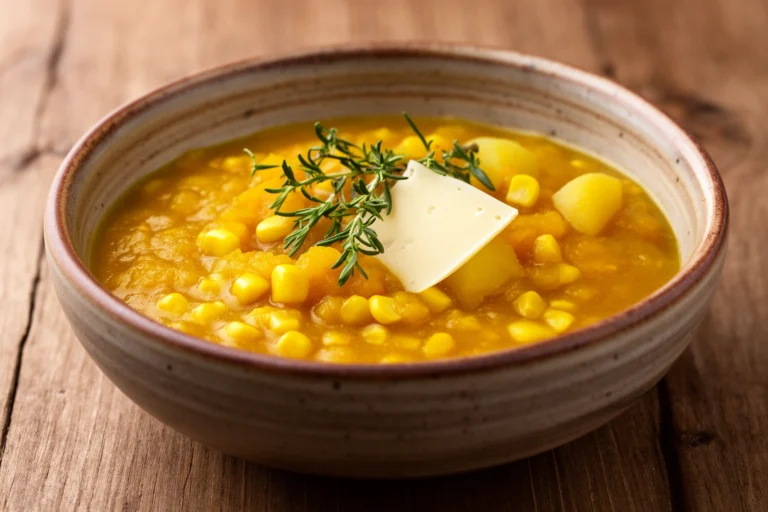
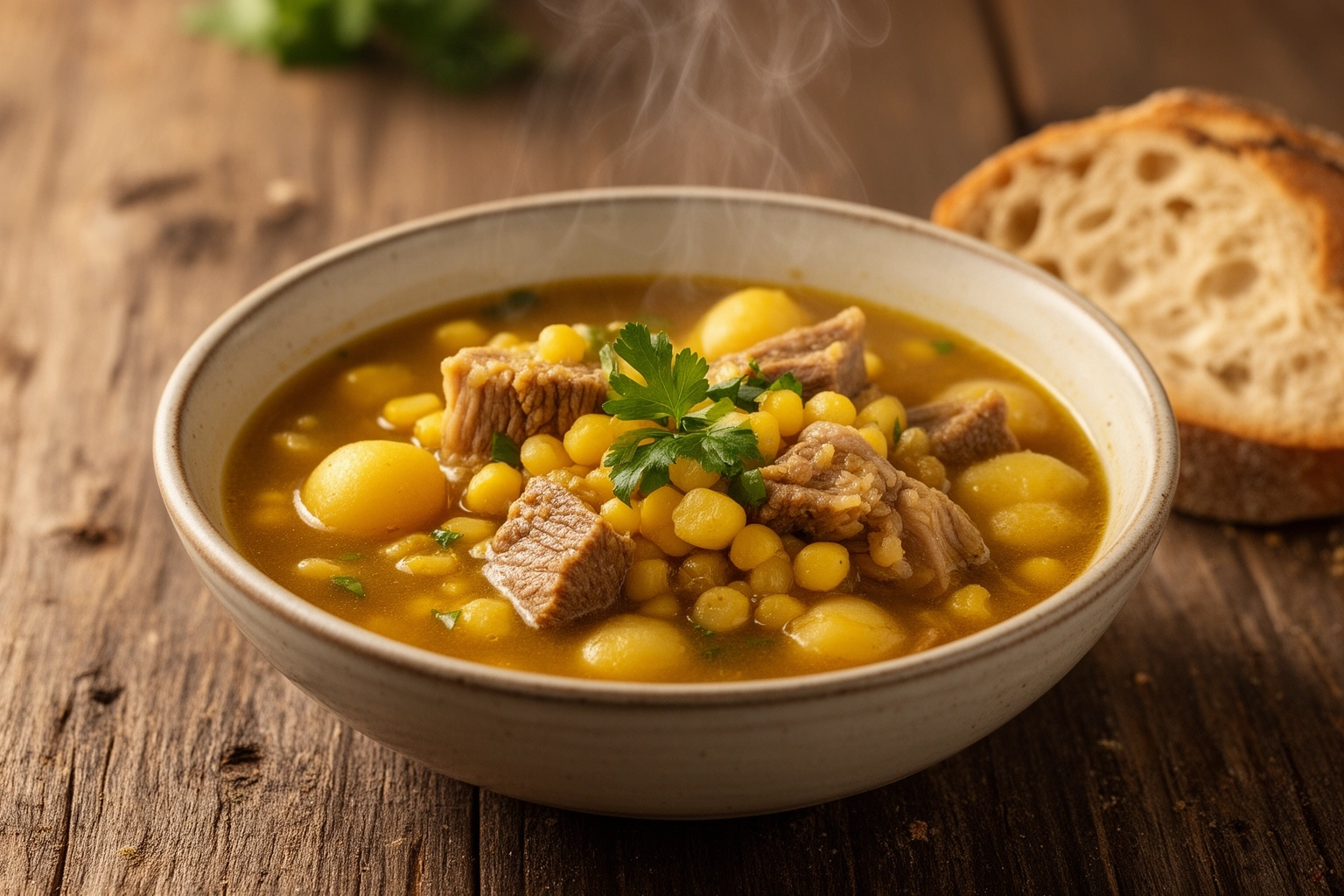
- The broth should be thick enough to coat the back of a spoon, never thin or watery, with visible pork pieces and a rich golden color.
- Chuño, freeze-dried potato, should stay firm and hold its shape while absorbing the broth; mushy chuño signals overcooking or poor preparation.
- A menu listing fricase alongside other Bolivian dishes like salteñas, silpancho, or pique macho is a strong authenticity signal.
- Restaurants that open early and sometimes sell out before lunch are often taking the dish seriously, since fricase is traditionally a morning meal in Bolivia.
- Bread, extra corn, or a side of llajua are traditional accompaniments; requesting bread specifically helps soak up the rich broth properly.
What Fricase Boliviano Actually Is
Fricase boliviano is a traditional Bolivian pork stew built on a thick, spicy broth flavored with ají amarillo, combined with hominy corn or chuño (freeze-dried potato) and regular potatoes. The dish traces its roots to a combination of indigenous Andean ingredients, corn and potatoes native to the region for thousands of years, and pork introduced through Spanish colonial influence. Over generations, Bolivian families developed the recipe into what’s now one of the country’s most respected traditional dishes, closely tied to family gatherings, weekend meals, and notably, breakfast.
Why It’s Traditionally a Breakfast Dish
In Bolivia, fricase is commonly eaten for both breakfast and lunch, particularly popular during cold mornings when a rich, warming stew makes an especially satisfying start to the day. This breakfast association surprises a lot of first-time searchers outside Bolivia, where hearty stews are typically associated with dinner, so don’t be surprised if the best local versions sell out well before lunchtime rather than being freshest in the evening.
The Ingredients That Define It
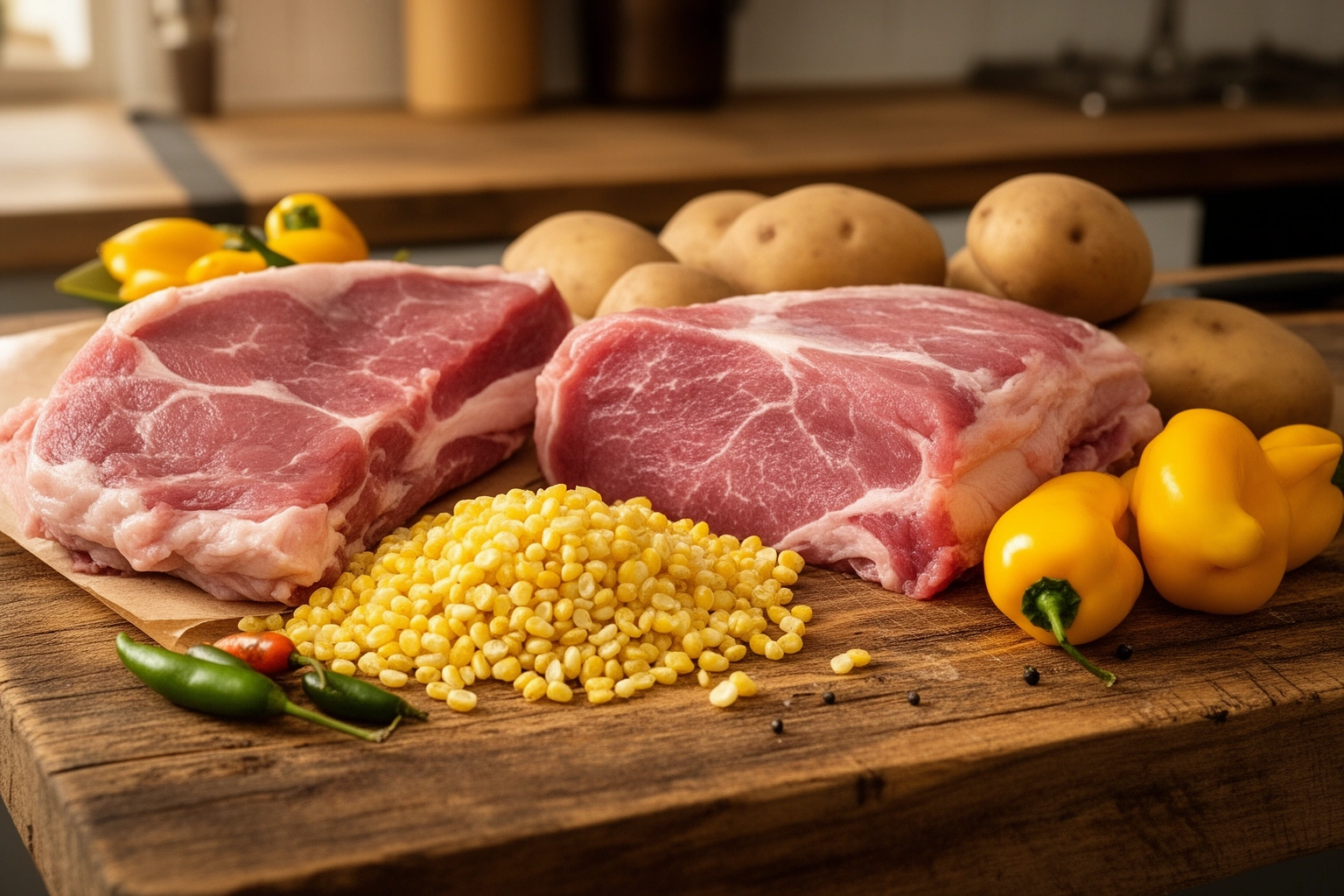
Slow-cooked pork forms the foundation, providing richness and depth that develops specifically through hours of gentle cooking rather than a quick simmer. Chuño, a freeze-dried potato with a distinctly firm texture, is traditional in many versions, though hominy corn (mote) appears frequently as well, sometimes alongside chuño rather than replacing it. Ají amarillo contributes the broth’s signature color and a moderate, warming heat, while garlic, onion, and cumin round out the seasoning without overwhelming the pork itself.
How to Judge Quality Before You Order
The broth should be thick enough to visibly coat the back of a spoon, never thin or watery, with a rich golden color and visible pieces of pork, chuño or corn, and potato throughout. A proper bowl delivers layered flavor: broth, spice, and aroma on the first sip, followed by pork and chuño together in the next bite, rather than one single ingredient dominating the whole dish.
What Chuño Texture Tells You
Chuño should remain firm yet tender, absorbing the broth’s flavor while still holding its shape; if it’s broken down into mush, that’s a fairly reliable sign the dish was overcooked or the chuño wasn’t handled with proper care during preparation. This is a genuinely useful, easy-to-check detail, since chuño’s texture is one of the more visually obvious quality markers in the entire bowl.
Warning Signs Worth Watching For
A watery, thin broth is one of the most common failure points, usually signaling a kitchen that either rushed the cooking process or diluted the broth to stretch portions. Dry, tough pork suggests the meat wasn’t given enough time to properly tenderize during the slow-cooking process the dish fundamentally depends on. Bland or uneven seasoning, where the ají amarillo, garlic, and cumin don’t come together into a cohesive flavor, similarly points to a rushed or careless kitchen.
Reading Menu Signals for Authenticity
A menu that lists fricase alongside other genuinely Bolivian dishes, salteñas, silpancho, or pique macho, is a considerably stronger authenticity signal than one labeling everything simply as “Latin food.” That breadth suggests a kitchen with real grounding in Bolivian cuisine specifically, rather than one borrowing a single recognizable dish to round out a generic Latin American menu.
What Menu Descriptions Should Include
Authentic menus tend to name specific ingredients directly, pork, chuño, ají amarillo, hominy corn, rather than a vague, generic description like simply “pork soup” or “Bolivian stew.” Clear menu labeling that explains what’s actually inside the dish signals a kitchen that takes pride in the preparation and wants customers to understand what they’re ordering, rather than treating the dish as an interchangeable menu filler item.
Asking Direct Questions Before Ordering
Ask how long the fricase has been cooking, what type of pork cut is used, and whether traditional spices are involved; staff at genuinely authentic restaurants tend to answer these questions enthusiastically and specifically, since they’re proud of their preparation. Dismissive or vague responses to these questions are a legitimate signal to order something else instead.
Where to Look
Dedicated Bolivian restaurants and family-run cafés are the most reliable source, since these kitchens typically follow traditional recipes passed down through generations rather than commercializing or simplifying the dish.
Family-Owned Restaurants and Small Kitchens
Family-owned cafés often deliver the best fricase precisely because their cooking style stays close to tradition, recipes are homemade rather than standardized, and portions tend to be generous compared to larger chain restaurants. These places may not look particularly polished from the outside, but food quality is frequently outstanding, since recipe fidelity matters more to these kitchens than decor or marketing.
Neighborhoods With Strong Bolivian or Latin American Communities
Look specifically for neighborhoods where Spanish is commonly spoken and other Bolivian or Latin American businesses are visibly nearby, markets selling traditional ingredients, Spanish-language bakeries, and similar South American restaurants all indicate a community that genuinely values authentic cuisine. Latin American food markets sometimes have small kitchens inside preparing authentic dishes daily, and these hidden spots can genuinely surprise you with excellent, flavorful fricase.
Cultural Festivals and Community Events
Bolivian cultural events frequently feature traditional foods prepared by experienced home cooks, offering a genuinely reliable source of authentic fricase outside a standard restaurant setting. These events are also a low-risk way to sample multiple cooks’ versions side by side in a single visit.
How to Search and Read Reviews Effectively
Check customer reviews specifically for words like “authentic,” “traditional,” “tender,” and “thick broth,” and treat vague reviews focused only on service or ambiance as far less informative than ones describing texture and flavor directly. Facebook groups and Reddit communities focused on Bolivian or Latin American cuisine frequently recommend authentic, hidden restaurants that don’t rank prominently in a generic search engine query.
What to Avoid
Restaurants relying heavily on pre-packaged or frozen ingredients typically produce a version lacking the depth of flavor that defines properly made fricase. Negative reviews specifically mentioning “watery,” “bland,” or “tough meat” are worth taking seriously as a reason to look elsewhere rather than risk a disappointing bowl.
What to Order Alongside It
Bread is the classic accompaniment, perfect for soaking up the rich broth, and requesting it specifically over rice makes for a more traditional experience. Extra hominy corn or a side of llajua, Bolivia’s traditional spicy salsa, are common additions some restaurants offer at no extra cost. For dessert, a traditional Bolivian rice pudding, arroz con leche, pairs particularly well as a sweet, creamy finish that complements the stew’s richness and spice.
Is Fricase Boliviano Spicy?
Traditional fricase is moderately spicy, focused more on flavor depth than overwhelming heat, thanks to ají amarillo’s warmth rather than an aggressively hot chili. Many restaurants can adjust the spice level for diners who prefer it milder, so it’s worth asking directly if heat sensitivity is a concern rather than assuming the dish will be too intense.
Making It at Home
A homemade version starts with slow-braising pork for several hours until genuinely tender, building the broth around ají amarillo, garlic, onion, and cumin, then adding chuño or hominy corn and potatoes to simmer until the flavors meld. Sourcing genuine ají amarillo paste and, if possible, real chuño from a Latin American grocery store matters significantly more than any other single ingredient decision, since substituting a generic chili or skipping chuño entirely changes the dish’s character meaningfully. Patience is the real secret: rushing the pork’s cooking time is the single most common reason a homemade version falls short of the real thing.
Check These Related Articles
- Best Berenjenas Con Miel Near Me: Complete Guide
- Best Pique Macho Near Me: Complete Guide
- Best Papa A La Huancaina Near Me: Complete Guide
- Best Provoleta Al Horno Near Me: Complete Guide
- Best Tarta De Acelga Near Me: Complete Guide
Judging fricase boliviano the right way uses the same instincts that worked for finding an authentic pique macho: check whether the broader menu reflects real depth in Bolivian cuisine specifically, ask direct questions about preparation rather than relying on presentation alone, and trust detailed reviews describing texture and broth consistency over a general star rating.
Frequently Asked Questions
What exactly is fricase boliviano?
It’s a thick Bolivian pork stew built on aíí amarillo broth, chuño or hominy corn, and potatoes, traditionally eaten hot for breakfast, especially on cold days.
Why is fricase boliviano often a breakfast dish?
In Bolivia, it’s traditionally eaten as a breakfast dish, particularly popular on cold mornings, though it’s also served for lunch and at family gatherings.
What should the broth look and taste like in a properly made fricase?
It should be thick enough to coat the back of a spoon, with a rich golden color and visible pork, chuño or corn, and potato throughout.
How can you tell if the chuño is prepared correctly?
Chuño should stay firm and hold its shape while absorbing the broth; if it turns mushy, that signals overcooking or careless preparation.
What menu signals suggest an authentic version?
A menu listing fricase alongside other genuinely Bolivian dishes like salteñas, silpancho, or pique macho, rather than a generic Latin food label.
Is fricase boliviano very spicy?
It’s moderately spicy, focused on flavor depth from aíí amarillo rather than overwhelming heat, and many restaurants can adjust the spice level on request.
What sides pair well with fricase boliviano?
Bread for soaking up the broth, extra hominy corn, or a side of llajua, Bolivia’s traditional spicy salsa.
How do you make an authentic version at home?
Slow-braise pork for several hours, build the broth with aíí amarillo, garlic, onion, and cumin, then add chúño or hominy corn and potatoes to simmer until the flavors meld.